
Invent, Innovate, Integrate
- info@zenkaeurope.com
-
 English
English
English
 Deutsch
 Français
 Español
 Italiano
 中文
中文
 हिन्दी
 Lietuviškai
Embedded - System On Chip (SoC)
Embedded - System On Chip (SoC)
- Products
- Integrated Circuits (ICs)
- Embedded - System On Chip (SoC)
Manufacturer
Series
Operating Temperature
Packaging
Package / Case
Base Part Number
Supplier Device Package
Clear Filters
Loading products…
| Image | Part Number | Manufacturer | Description | Series | Operating Temperature | Features | Packaging | Lead Free Status | Package / Case | Base Part Number | Supplier Device Package | Applications |
|---|---|---|---|---|---|---|---|---|---|---|---|---|

|
XCZU17EG-L2FFVE1924E | Xilinx | IC FPGA 668 I/O 1924FCBGA | Zynq® UltraScale+™ MPSoC EG | 0°C ~ 100°C (TJ) | - | Tray | - | 1924-BBGA, FCBGA | - | 1924-FCBGA (45x45) | - |

|
A2F500M3G-1FGG484 | Microsemi | IC FPGA 512K FLASH 484FBGA | SmartFusion® | 0°C ~ 85°C (TJ) | - | Tray | - | 484-BGA | A2F500M3G | 484-FPBGA (23x23) | - |
|
|
XCZU5EV-L1FBVB900I | Xilinx | IC FPGA 204 I/O 900FCBGA | Zynq® UltraScale+™ MPSoC EV | -40°C ~ 100°C (TJ) | - | Tray | - | 900-BBGA, FCBGA | - | 900-FCBGA (31x31) | - |
|
|
M2S060-FGG484I | Microsemi | IC FPGA SOC 60K LUTS | SmartFusion®2 | -40°C ~ 100°C (TJ) | - | Tray | - | 484-BGA | - | 484-FPBGA (23x23) | - |
|
|
XCZU9EG-2FFVC900E | Xilinx | IC FPGA 204 I/O 900FCBGA | Zynq® UltraScale+™ MPSoC EG | 0°C ~ 100°C (TJ) | - | Tray | - | 900-BBGA, FCBGA | - | 900-FCBGA (31x31) | - |
|
|
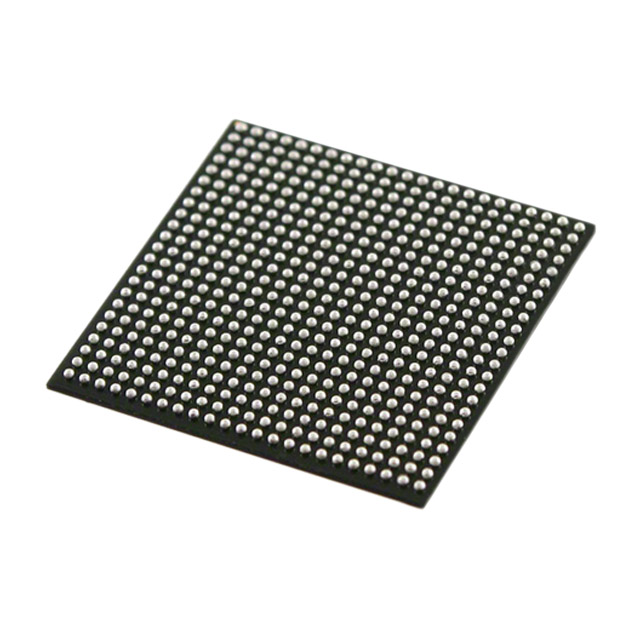
M2S060-FCS325 | Microsemi | IC FPGA SOC 60K LUTS | SmartFusion®2 | 0°C ~ 85°C (TJ) | - | Tray | - | 325-TFBGA | - | 325-BGA (11x11) | - |
|
5CSEBA5U19C6N | Intel® FPGAs | IC FPGA 66 I/O 484UBGA | Cyclone® V SE | 0°C ~ 85°C (TJ) | - | Tray | - | 484-FBGA | 5CSEBA5 | 484-UBGA (19x19) | - |

|
10AS016E3F27I1SG | Altera (Intel® Programmable Solutions Group) | IC SOC FPGA 240 I/O 672FBGA | Arria 10 SX | -40°C ~ 100°C (TJ) | - | Tray | - | 672-BBGA, FCBGA | - | 672-FBGA (27x27) | - |
|
|
XCZU19EG-3FFVE1924E | Xilinx | IC FPGA 668 I/O 1924FCBGA | Zynq® UltraScale+™ MPSoC EG | 0°C ~ 100°C (TJ) | - | Tray | - | 1924-BBGA, FCBGA | - | 1924-FCBGA (45x45) | - |
|
|
M2S010TS-VF400I | Microsemi | IC FPGA SOC 10K LUTS | SmartFusion®2 | -40°C ~ 100°C (TJ) | - | Tray | - | 400-LFBGA | - | 400-VFBGA (17x17) | - |
About Embedded - System On Chip (SoC)
A System On Chip (SoC) is a complete integrated circuit that contains most or all of the components required for a computing or electronic system on a single chip. These components typically include a central processing unit (CPU) or microcontroller, memory, input/output interfaces, and peripheral controllers. SoCs are designed to provide high performance and low power consumption while minimizing the size and complexity of the overall system. They are commonly used in embedded systems such as smartphones, tablets, IoT devices, and automotive electronics, where space, power, and cost constraints are critical considerations.