
Invent, Innovate, Integrate
- info@zenkaeurope.com
-
 English
English
English
 Deutsch
 Français
 Español
 Italiano
 中文
中文
 हिन्दी
 Lietuviškai
IrDA Transceiver Modules
IrDA Transceiver Modules
- Products
- Sensors, Transducers
- IrDA Transceiver Modules
Clear Filters
Loading products…
| Image | Part Number | Manufacturer | Description | Series | Operating Temperature | Features | Size / Dimension | Linear Range |
|---|---|---|---|---|---|---|---|---|

|
RPM872-H12E4 | LAPIS Semiconductor | MODULE IRDA 115.2KBPS 8SMD | - | -20°C ~ 85°C | - | - | - |

|
GP2W1001YP | Sharp Microelectronics | IRDA MODULE 115.2KBPS 10SMD | - | -10°C ~ 70°C | - | - | - |
|
|
RPM872-H14E2 | LAPIS Semiconductor | MODULE IRDA 115.2KBPS 8SMD | - | -20°C ~ 85°C | - | - | - |

|
TFBS4650-TR4 | 4D Systems | TXRX IRDA 115.2KBIT SIDE | - | -25°C ~ 85°C | - | - | - |
|
|
RPM872-E2A | LAPIS Semiconductor | MODULE IRDA 115.2KBPS 8SMD | - | -20°C ~ 85°C | - | - | - |
|
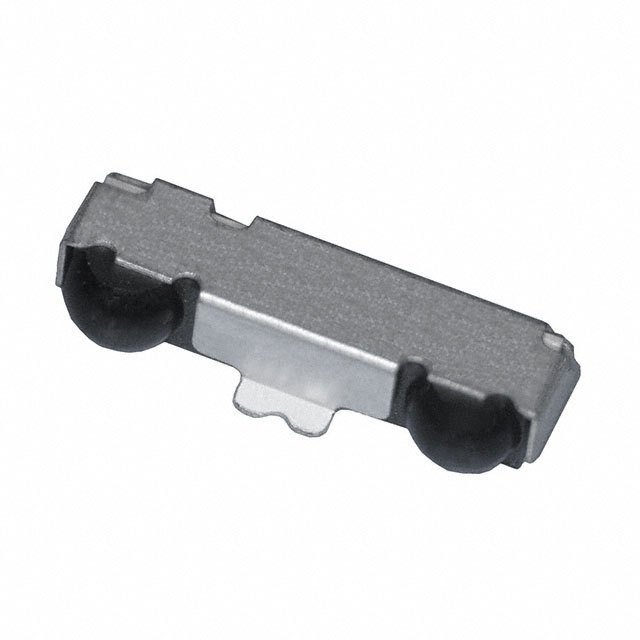
CND0333A | Panasonic | IRDA MODULE 4MBPS TOP VIEW | - | -20°C ~ 70°C | - | - | - |

|
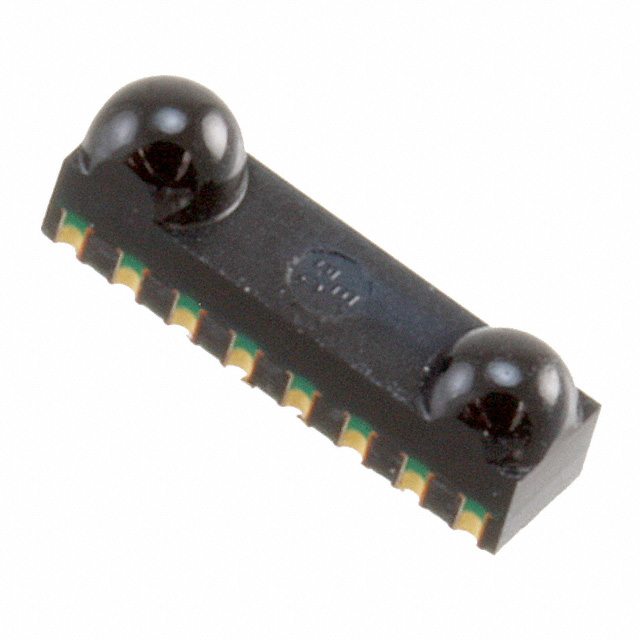
HSDL-3208-025 | Lite-On, Inc. | IRDA TXRX MOD 115.2KBPS 7-SMD | - | -25°C ~ 70°C | - | - | - |
|
RPM871-E4A | LAPIS Semiconductor | MODULE IRDA 115.2KBPS 8SMD | - | -20°C ~ 85°C | - | - | - |
|
|
RPM872-E2 | LAPIS Semiconductor | MODULE IRDA 115.2KBPS 8SMD | - | -20°C ~ 85°C | - | - | - |
|
|
CND0313A | Panasonic | IRDA MODULE 4MBPS SIDE VIEW | - | -20°C ~ 70°C | - | - | - |
About IrDA Transceiver Modules
IrDA transceiver modules are communication modules designed to facilitate infrared data transmission and reception in electronic devices and systems. IrDA (Infrared Data Association) transceivers utilize infrared light pulses to wirelessly transmit data between devices at short ranges. These modules incorporate infrared LEDs and photodiodes, along with modulation and demodulation circuitry, to enable bidirectional data communication according to IrDA standards. IrDA transceiver modules find applications in consumer electronics, mobile devices, printers, and industrial equipment for tasks such as data synchronization, file transfer, and remote control. They offer advantages such as low power consumption, immunity to electromagnetic interference, and compatibility with IrDA-compliant devices, making them suitable for wireless data communication in environments where radio frequency communication may not be desirable or feasible.