
Invent, Innovate, Integrate
- info@zenkaeurope.com
-
 English
English
English
 Deutsch
 Français
 Español
 Italiano
 中文
中文
 हिन्दी
 Lietuviškai
Clear Filters
Loading products…
| Image | Part Number | Manufacturer | Description | Series | RoHS Status | Manufacturer Part Number | Lead Free Status | For Use With/Related Products | Accessory Type |
|---|---|---|---|---|---|---|---|---|---|

|
HC4ED-HP-AC200V | Panasonic | RELAY GEN PURP 4PDT 200V | - | - | - | - | - | - |

|
HMD-5B | Agastat Relays / TE Connectivity | HMD-5B = HM RELAY 0.5 LEADS | - | - | - | - | - | - |
|
|
HC4ED-PL-AC200V | Panasonic | RELAY GEN PURP 4PDT 200V | - | - | - | - | - | - |
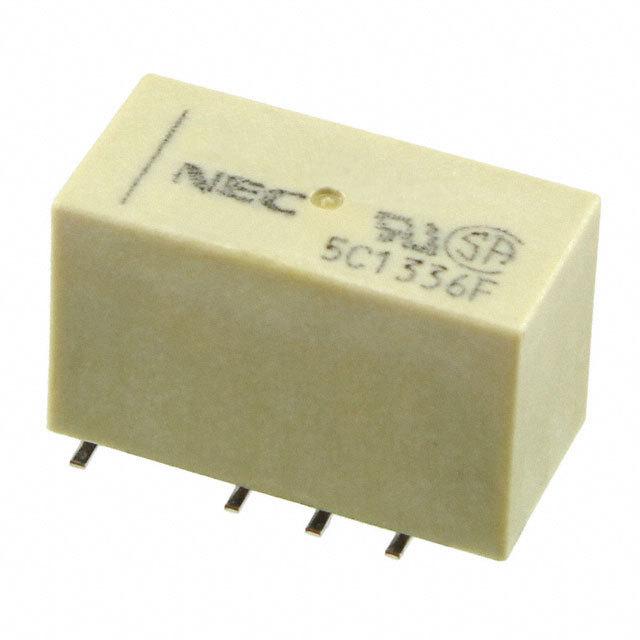
|
EE2-4.5SNUH | KEMET | RELAY GEN PURPOSE DPDT 2A 250V | EE2 | - | - | - | - | - |
|
|
HC4ED-L-DC6V-D | Panasonic | RELAY GEN PURP 4PDT 6V | - | - | - | - | - | - |
|
|
2-1393809-8 | Agastat Relays / TE Connectivity | RELAY GEN PURP | - | - | - | - | - | - |
|
|
1-1617145-3 | Agastat Relays / TE Connectivity | JMGAC-5M = M39016/17-031M | - | - | - | - | - | - |
|
|
HC4ED-HTM-AC48V | Panasonic | RELAY GEN PURP 4PDT 48V | - | - | - | - | - | - |
|
|
5-1393806-0 | Agastat Relays / TE Connectivity | RELAY GEN PURP | - | - | - | - | - | - |
|
TXS2SA-LT-9V-1 | Panasonic | TXS RELAY 2 FORM C 9V | - | - | - | - | - | - |
About Signal Relays, Up to 2 Amps
Signal relays are electromechanical switches designed to control the flow of low-power signals or currents in electronic circuits. They are characterized by their ability to handle relatively small signal currents, typically up to 2 amps, and are used in applications where precision switching, low signal distortion, and high reliability are required. Signal relays consist of a coil, an armature, and contacts housed within a sealed enclosure. When energized, the coil generates a magnetic field that attracts the armature, causing the contacts to make or break the electrical connection. Signal relays find applications in telecommunications, instrumentation, automated test equipment, medical devices, and industrial control systems where they are used for functions such as signal routing, switching, and isolation in electronic circuits.