
Invent, Innovate, Integrate
- info@zenkaeurope.com
-
 English
English
English
 Deutsch
 Français
 Español
 Italiano
 中文
中文
 हिन्दी
 Lietuviškai
Temperature Sensors - PTC Thermistors
Temperature Sensors - PTC Thermistors
- Products
- Sensors, Transducers
- Temperature Sensors - PTC Thermistors
Clear Filters
Loading products…
| Image | Part Number | Manufacturer | Description | Series | Operating Temperature | Packaging | Mounting Type | Current | Accuracy | Termination | Package / Case | Temperature Coefficient |
|---|---|---|---|---|---|---|---|---|---|---|---|---|

|
B59935C0120A051 | EPCOS | THERMISTOR PTC 300 MOHM 25% DISC | - | -40°C ~ 125°C | Tape & Reel (TR) | Through Hole | - | - | - | Disc, 22mm Dia x 3.5mm W | - |

|
KTY83/121,113 | NXP Semiconductors / Freescale | THERMISTOR PTC 990 OHM DO34 | KTY83 | -55°C ~ 175°C | Tape & Reel (TR) | Through Hole | - | - | - | DO-204AG, DO-34, Axial | - |
|
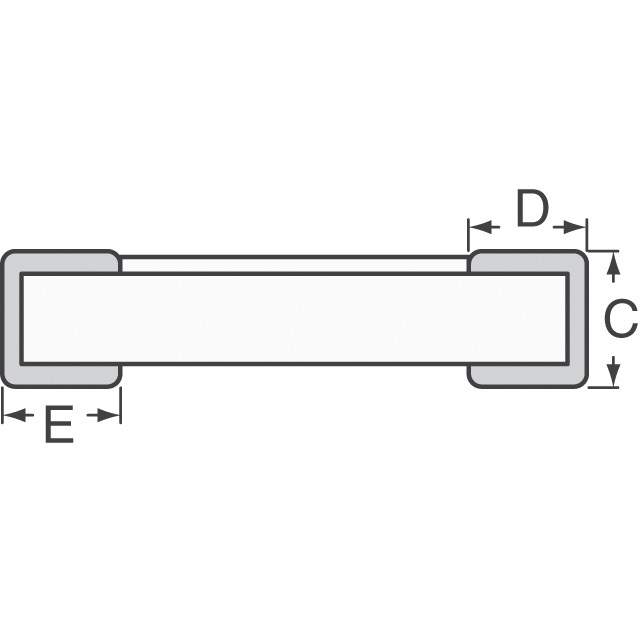
TFPT1206L1000JV | Dale / Vishay | THERMISTOR PTC 100 OHM 5% 1206 | TFPT | -55°C ~ 150°C | Tape & Reel (TR) | Surface Mount | - | - | - | 1206 (3216 Metric) | - |

|
TFPTL15L3901JH5B | Dale / Vishay | THERMISTOR PTC 3.9K OHM 5% RAD | TFPTL | -55°C ~ 150°C | - | Through Hole | - | - | - | Radial | - |

|
B59315P1120A62 | 4D Systems | PTC THERMISTOR P 1315-A 120-A 62 | Automotive, AEC-Q200, B59215 | -40°C ~ 125°C | - | Surface Mount | - | - | - | - | - |

|
PTCSSLVT111DBE | Texas Instruments | THERMISTOR PTC 100 OHM RADIAL | PTCSSLVT | - | - | PCB, Through Hole | - | - | - | Radial | - |
|
|
PTCSGM3T121DBE | Texas Instruments | THERMISTOR PTC 5% RADIAL | - | -20°C ~ 165°C | - | PCB, Through Hole | - | - | - | Radial | - |
|
|
PTCCL05H250HBE | Texas Instruments | THERMISTOR PTC | - | - | - | - | - | - | - | - | - |
|
|
TFPTL10L4700FH5B | Dale / Vishay | THERMISTOR PTC 470 OHM 1% RADIAL | TFPTL | -55°C ~ 150°C | - | Through Hole | - | - | - | Radial | - |
|
|
B59008C170A40 | EPCOS | THERMISTOR PTC 250 OHM RADIAL | - | 90°C ~ 160°C | Bulk | PCB, Through Hole | - | - | - | Radial | - |
About Temperature Sensors - PTC Thermistors
Positive temperature coefficient (PTC) thermistors are temperature-sensitive resistors whose resistance increases significantly with temperature rise. PTC thermistors are typically made of ceramic materials doped with metal oxides and exhibit a nonlinear resistance-temperature characteristic. They find applications in overcurrent protection, motor starting, temperature sensing, and temperature compensation circuits. PTC thermistors offer self-regulating characteristics, where their resistance increases sharply when the operating temperature exceeds a certain threshold, limiting current flow and providing inherent overcurrent protection. PTC thermistors also find applications in temperature compensation circuits and inrush current limiters, where their resistance changes with temperature variations to control current flow and stabilize operating conditions.