
Invent, Innovate, Integrate
- info@zenkaeurope.com
-
 English
English
English
 Deutsch
 Français
 Español
 Italiano
 中文
中文
 हिन्दी
 Lietuviškai
Manufacturer
Series
Packaging
RoHS Status
Manufacturer Part Number
Voltage - Supply
Shell Style
Package / Case
Polarization
Clear Filters
Loading products…
| Image | Part Number | Manufacturer | Description | Series | Packaging | RoHS Status | Manufacturer Part Number | Voltage - Supply | Output | Shell Style | Package / Case | Polarization |
|---|---|---|---|---|---|---|---|---|---|---|---|---|

|
LTC5591IUH#PBF | ADI (Analog Devices, Inc.) | IC MIXER 1.3-2.3GHZ 24QFN | - | Tube | - | - | 3.1 V ~ 3.5 V | - | - | 24-WQFN Exposed Pad | - |

|
HMC316MS8TR | ADI (Analog Devices, Inc.) | IC AMP MMIC LNA 5.0-6.0GHZ 8MSOP | - | Tape & Reel (TR) | - | - | - | - | - | 8-TSSOP, 8-MSOP (0.118", 3.00mm Width) | - |
|
|
HMC129ALC4 | ADI (Analog Devices, Inc.) | IC MMIC MIXER DBL-BAL 24SMD | - | Strip | - | - | - | - | - | 24-LCC Exposed Pad | - |
|
|
HMC786LP4E | ADI (Analog Devices, Inc.) | IC MMIC MIXER W/LO AMP 24-QFN | - | Strip | - | - | 4.75 V ~ 5.25 V | - | - | 24-VFQFN Exposed Pad | - |

|
HMC558ALC3BTR | ADI (Analog Devices, Inc.) | IC MMIC MIXER DBL-BAL 12SMD | - | Tape & Reel (TR) | - | - | - | - | - | 12-CLCC Exposed Pad | - |
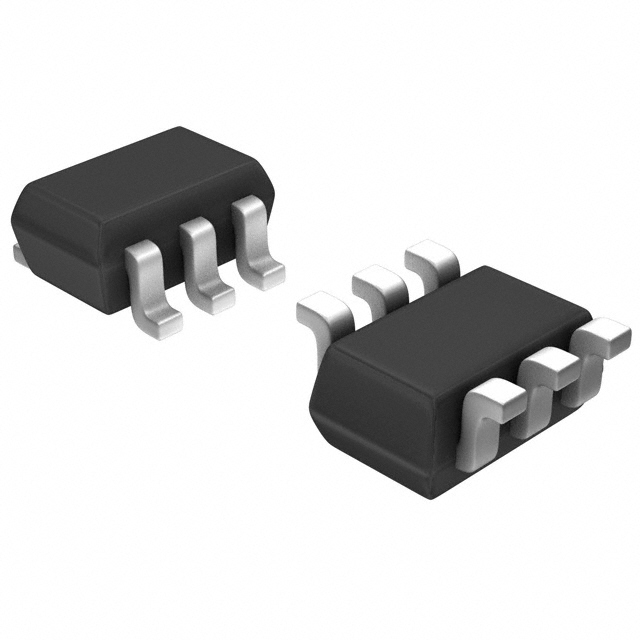
|
HMC333 | ADI (Analog Devices, Inc.) | IC MIXER GAAS 3.0-3.8GHZ SOT23-6 | - | Strip | - | - | 3 V ~ 5 V | - | - | SOT-23-6 | - |
|
|
HMC966LP4E | ADI (Analog Devices, Inc.) | IC MMIC IQ DOWNCONVERTER 24-QFN | - | Strip | - | - | 3.5V | - | - | 24-VFQFN Exposed Pad | - |

|
HMC1041LC4TR-R5 | ADI (Analog Devices, Inc.) | IC MMIC IQ MIXER 17-27GHZ LC4 | - | Tape & Reel (TR) | - | - | - | - | - | 24-TFQFN Exposed Pad | - |
|
|
HMC220BMS8GE | ADI (Analog Devices, Inc.) | 5-12 GHZ DBL-BAL MIXER | - | - | - | - | - | - | - | 8-TSSOP, 8-MSOP (0.118", 3.00mm Width) Exposed Pad | - |
|
|
HMC333E | ADI (Analog Devices, Inc.) | IC MIXER GAAS 3.0-3.8GHZ SOT-26 | - | Strip | - | - | 3 V ~ 5 V | - | - | SOT-23-6 | - |
About RF Mixers
RF mixers are electronic devices used to convert signals from one frequency to another in RF and microwave communication systems. They operate by combining two or more input signals and producing an output signal containing the sum and difference frequencies of the input signals. RF mixers find applications in frequency conversion, modulation, demodulation, upconversion, downconversion, and heterodyning processes in wireless communication systems, radar systems, test and measurement equipment, and satellite communication systems. They play a critical role in translating signals between different frequency bands, enabling efficient signal processing and transmission in RF systems.